
This study explores the development of eco-friendly, high-performance fan blades using a hybrid composite of Enset and Bamboo fibers reinforced with unsaturated polyester resin. An Enset-Bamboo reinforced composite was fabricated by using hand layup method. The easiest method for preparing polymers is hand layup. Above all, in order to prevent polyester tar from adhering to the surface, the shape surface of the previously created mold was cleaned by applying discharge gel or wax. To achieve a high-quality surface finish on the item, smooth-surfaced Polyethylene Plastic was utilized at both the upper and lower portions of the form plate. The Enset - bamboo fiber reinforced polyester composite was fabricated using a hand lay-up process. An Enset-Bamboo reinforced fiber composite is the best material based on the result of strength and low weight ratio and safe for ceiling fan blade. To improve mechanical interlocking, fibers underwent alkaline (NaOH) treatment, and an optimal composition of 25% Enset, 20% Bamboo, and 55% polyester was determined through systematic analysis. The result of the composite blades achieved excellent durability, exhibited a low water absorption rate of 1.38%, and offered a significant 31% weight reduction compared to traditional aluminum alternatives, demonstrating their viability for aerodynamic applications. So, generally Enset-bamboo fiber reinforced composite matrix material is the suitable weight ratio, strength and durability for the ceiling fan blade.
| Published in | American Journal of Mechanical and Industrial Engineering (Volume 11, Issue 3) |
| DOI | 10.11648/j.ajmie.20261103.12 |
| Page(s) | 45-56 |
| Creative Commons |
This is an Open Access article, distributed under the terms of the Creative Commons Attribution 4.0 International License (http://creativecommons.org/licenses/by/4.0/), which permits unrestricted use, distribution and reproduction in any medium or format, provided the original work is properly cited. |
| Copyright |
Copyright © The Author(s), 2026. Published by Science Publishing Group |
Bamboo Fiber, Enset Fibers, Fan Blade, Hybrid Composite, Natural Fiber, Polyester
Enset Fiber | Bamboo Fiber | Polyester | Composite variants |
|---|---|---|---|
15 | 10 | 75 | 15 EF+10 BF+75 EF |
15 | 15 | 70 | 15 EF+15 BF+70 EF |
15 | 20 | 65 | 15 EF+20 BF+65 EF |
20 | 10 | 70 | 20 EF+10 BF+70 EF |
20 | 15 | 65 | 20 EF+15 BF +65 EF |
20 | 20 | 60 | 20 EF+20 BF+60 EF |
25 | 10 | 65 | 25 EF+10 BF+65 EF |
25 | 15 | 60 | 25 EF+15 BF+60 EF |
25 | 20 | 55 | 25 EF+20 BF+55 EF |
Enset Fiber | Bamboo Fiber | Polyester | Composite variants | Density of each sample (g/cm3) |
|---|---|---|---|---|
15 | 10 | 75 | 15 EF+10 BF+75 EF | 1.35 |
15 | 15 | 70 | 15 EF+15 BF+70 EF | 1.29 |
15 | 20 | 65 | 15 EF+20 BF+65 EF | 1.26 |
20 | 10 | 70 | 20 EF+10 BF+70 EF | 1.33 |
20 | 15 | 65 | 20 EF+15 BF +65 EF | 1.29 |
20 | 20 | 60 | 20 EF+20 BF+60 EF | 1.26 |
25 | 10 | 65 | 25 EF+10 BF+65 EF | 1.26 |
25 | 15 | 60 | 25 EF+15 BF+60 EF | 1.29 |
25 | 20 | 55 | 25 EF+20 BF+55 EF | 1.25 |
Enset Fiber | Bamboo Fiber | Polyester | Density (g/cm3) | Calculated mass (g) |
|---|---|---|---|---|
15 | 10 | 75 | 1.35 | 89.94 |
15 | 15 | 70 | 1.29 | 83.94 |
15 | 20 | 65 | 1.26 | 83.94 |
20 | 10 | 70 | 1.33 | 88.61 |
20 | 15 | 65 | 1.29 | 85.94 |
20 | 20 | 60 | 1.26 | 83.94 |
25 | 10 | 65 | 1.26 | 83.94 |
25 | 15 | 60 | 1.29 | 85.94 |
25 | 20 | 55 | 1.25 | 83.28 |
Sample | Composite variant | Mass of the fibre and matrix contents | ||
|---|---|---|---|---|
EF | B | P | ||
1 | 15 EF+10 BF+75 EF | 14.89 | 9.92 | 64.52 |
2 | 15 EF+15 BF+70 EF | 12.89 | 12.89 | 60.15 |
3 | 15 EF+20 BF+65 EF | 11.59 | 15.45 | 57.96 |
4 | 20 EF+10 BF+70 EF | 17.72 | 8.86 | 62.02 |
5 | 20 EF+15BF +65 EF | 15.85 | 11.89 | 59.46 |
6 | 20 EF+20 BF+60 EF | 15.99 | 15.99 | 59.96 |
7 | 25 EF+10 BF+65 EF | 20.15 | 8.06 | 60.45 |
8 | 25 EF+15 BF+60 EF | 20.48 | 12.29 | 53.26 |
9 | 25 EF+20 BF+55 EF | 18.15 | 14.52 | 50.83 |
Sample | Composite variants | Volume (cm3) | |||
|---|---|---|---|---|---|
EF | BF | P | VTotal | ||
1 | 15 EF+10 BF+75 EF | 10.78 | 11.8 | 46.08 | 68.66 |
2 | 15 EF+15 BF+70 EF | 9.34 | 15.34 | 42.96 | 67.64 |
3 | 15 EF+20 BF+65 EF | 8.39 | 18.39 | 41.4 | 68.18 |
4 | 20 EF+10 BF+70 EF | 12.84 | 10.54 | 44.3 | 67.68 |
5 | 20 EF+15 BF +65 EF | 11.48 | 14.15 | 42.47 | 68.1 |
6 | 20 EF+20 BF+60 EF | 11.58 | 19.03 | 42.82 | 73.43 |
7 | 25 EF+10 BF+65 EF | 14.6 | 9.59 | 43.17 | 67.36 |
8 | 25 EF+15 BF+60 EF | 14.84 | 14.63 | 38.04 | 67.51 |
9 | 25 EF+20 BF+55 EF | 13.15 | 17.28 | 36.30 | 66.73 |
Sample | Designation (Samples) | Volume fraction (%) | ||
|---|---|---|---|---|
EF | BF | P | ||
1 | 15 EF+10 BF+75 EF | 16.18 | 17.71 | 69.16 |
2 | 15 EF+15 BF+70 EF | 14.01 | 25.02 | 64.48 |
3 | 15 EF+20 BF+65 EF | 12.59 | 27.6 | 62.13 |
4 | 20 EF+10 BF+70 EF | 19.27 | 15.81 | 66.49 |
5 | 20 EF+15 BF +65 EF | 17.23 | 21.23 | 63.74 |
6 | 20 EF+20 BF+60 EF | 17.38 | 28.56 | 64.27 |
7 | 25 EF+10 BF+65 EF | 21.91 | 14.39 | 64.79 |
8 | 25 EF+15 BF+60 EF | 22.27 | 21.95 | 57.09 |
9 | 25 EF+20 BF+55 EF | 19.73 | 25.93 | 54.48 |
B | Bamboo Fiber |
CAD | Computer-Aided Design |
CM | Composite Material |
EF | Enset Fiber |
FRCM | Fiber Reinforced Composite Materials |
hr | Hour |
NaOH | Sodium Hydro-oxide |
NF | Natural Fibers |
°C | Degree Celsius |
| [1] | Adeeb, E., Sohn, C. H., Maqsood, A., & Afaq, M. A. (2018). Design optimization of ceiling fan blades with nonlinear sweep profile. Journal of Applied Fluid Mechanics, 11(5), 1153-1162. |
| [2] | Adier, M. F. V., Sevilla, M. E. P., Valerio, D. N. R., & Ongpeng, J. M. C. (2023). Bamboo as Sustainable Building Materials: A Systematic Review of Properties, Treatment Methods, and Standards. Buildings, 13(10). |
| [3] | Akter, M., Uddin, M. H., & Anik, H. R. (2024a). Plant fiber-reinforced polymer composites: a review on modification, fabrication, properties, and applications. In Polymer Bulletin (Vol. 81, Issue 1). Springer Berlin Heidelberg. |
| [4] | Al., A. A. et. (2018). Hydrophobic treatment of natural fibers and their composites—A review. Journal of Industrial Textiles, 47, n (SAGE Publications Ltd), 2153-2183. |
| [5] | Amjad, A. I. (2024). Advances in Bamboo Science Bamboo fibre : A sustainable solution for textile manufacturing. Advances in Bamboo Science, 7(January), 100088. |
| [6] | Andrew, J. J., & Dhakal, H. N. (2022). Composites Part C : Open Access Sustainable biobased composites for advanced applications : recent trends and future opportunities - A critical review. Composites Part C: Open Access, 7, 100220. |
| [7] | Ayele, A., & Sahu, O. (2014). Extension of Enset Plant Product for Rural Development in Ethiopia. Journal of Agricultural Economics, 2(3), 31-40. |
| [8] | Ayyappa Atmakuri, A. P. & G. J. (2025). Properties of Natural Fiber-Reinforced Epoxy Hybrid Composites. Fiber-Based HYbrid Composites for Engineering. |
| [9] | B. S. U. R. Ao and Arayana, K. S. A. N. (2017). Composite Material Analysis of Axial Flow Fans. IJSETR., 06, n, 5859-5865. |
| [10] | Barman, P., Dutta, P. P., Bardalai, M., & Dutta, P. P. (2024). Experimental investigation on bamboo fiber reinforced epoxy polymer composite materials developed through two different techniques. Proceedings of the Institution of Mechanical Engineers, Part C: Journal of Mechanical Engineering Science, 238(6), 2185-2204. |
| [11] | Behera, D., Pattnaik, S. S., Nanda, D., Mishra, P. P., & Manna, S. (2024). A review on bamboo fiber reinforced composites and their potential applications. Emergent Materials, 0123456789. |
| [12] | Bernard Miranda Campos, Serge Bourbigot, Gaëlle Fontaine, Bonnet, F. (2022). Thermoplastic matrix-based composites produced by resin transfer molding: A review. Polymer Composites. |
| [13] | Chigbu, U. E., Atiku, S. O., & Plessis, C. C. Du. (2023). The Science of Literature Reviews : Searching, Identifying, Selecting, and Synthesising. Publ. 11 (2023): 2. |
APA Style
Anebo, A. A., Sebre, M., Giorgis, T. H. (2026). Fabrication and Mechanical Feasibility of Fan Blade Using Alkaline Treated Hybrid Enset-Bamboo Fiber Reinforced Polyester Composite. American Journal of Mechanical and Industrial Engineering, 11(3), 45-56. https://doi.org/10.11648/j.ajmie.20261103.12
ACS Style
Anebo, A. A.; Sebre, M.; Giorgis, T. H. Fabrication and Mechanical Feasibility of Fan Blade Using Alkaline Treated Hybrid Enset-Bamboo Fiber Reinforced Polyester Composite. Am. J. Mech. Ind. Eng. 2026, 11(3), 45-56. doi: 10.11648/j.ajmie.20261103.12
@article{10.11648/j.ajmie.20261103.12,
  author = {Abera Ayza Anebo and Mubarek Sebre and Temesgen Haile Giorgis},
  title = {Fabrication and Mechanical Feasibility of Fan Blade Using Alkaline Treated Hybrid Enset-Bamboo Fiber Reinforced Polyester Composite},
  journal = {American Journal of Mechanical and Industrial Engineering},
  volume = {11},
  number = {3},
  pages = {45-56},
  doi = {10.11648/j.ajmie.20261103.12},
  url = {https://doi.org/10.11648/j.ajmie.20261103.12},
  eprint = {https://article.sciencepublishinggroup.com/pdf/10.11648.j.ajmie.20261103.12},
  abstract = {This study explores the development of eco-friendly, high-performance fan blades using a hybrid composite of Enset and Bamboo fibers reinforced with unsaturated polyester resin. An Enset-Bamboo reinforced composite was fabricated by using hand layup method. The easiest method for preparing polymers is hand layup. Above all, in order to prevent polyester tar from adhering to the surface, the shape surface of the previously created mold was cleaned by applying discharge gel or wax. To achieve a high-quality surface finish on the item, smooth-surfaced Polyethylene Plastic was utilized at both the upper and lower portions of the form plate. The Enset - bamboo fiber reinforced polyester composite was fabricated using a hand lay-up process. An Enset-Bamboo reinforced fiber composite is the best material based on the result of strength and low weight ratio and safe for ceiling fan blade. To improve mechanical interlocking, fibers underwent alkaline (NaOH) treatment, and an optimal composition of 25% Enset, 20% Bamboo, and 55% polyester was determined through systematic analysis. The result of the composite blades achieved excellent durability, exhibited a low water absorption rate of 1.38%, and offered a significant 31% weight reduction compared to traditional aluminum alternatives, demonstrating their viability for aerodynamic applications. So, generally Enset-bamboo fiber reinforced composite matrix material is the suitable weight ratio, strength and durability for the ceiling fan blade.},
 year = {2026}
}
TY  - JOUR
T1  - Fabrication and Mechanical Feasibility of Fan Blade Using Alkaline Treated Hybrid Enset-Bamboo Fiber Reinforced Polyester Composite
AU  - Abera Ayza Anebo
AU  - Mubarek Sebre
AU  - Temesgen Haile Giorgis
Y1  - 2026/08/06
PY  - 2026
N1  - https://doi.org/10.11648/j.ajmie.20261103.12
DO  - 10.11648/j.ajmie.20261103.12
T2  - American Journal of Mechanical and Industrial Engineering
JF  - American Journal of Mechanical and Industrial Engineering
JO  - American Journal of Mechanical and Industrial Engineering
SP  - 45
EP  - 56
PB  - Science Publishing Group
SN  - 2575-6060
UR  - https://doi.org/10.11648/j.ajmie.20261103.12
AB  - This study explores the development of eco-friendly, high-performance fan blades using a hybrid composite of Enset and Bamboo fibers reinforced with unsaturated polyester resin. An Enset-Bamboo reinforced composite was fabricated by using hand layup method. The easiest method for preparing polymers is hand layup. Above all, in order to prevent polyester tar from adhering to the surface, the shape surface of the previously created mold was cleaned by applying discharge gel or wax. To achieve a high-quality surface finish on the item, smooth-surfaced Polyethylene Plastic was utilized at both the upper and lower portions of the form plate. The Enset - bamboo fiber reinforced polyester composite was fabricated using a hand lay-up process. An Enset-Bamboo reinforced fiber composite is the best material based on the result of strength and low weight ratio and safe for ceiling fan blade. To improve mechanical interlocking, fibers underwent alkaline (NaOH) treatment, and an optimal composition of 25% Enset, 20% Bamboo, and 55% polyester was determined through systematic analysis. The result of the composite blades achieved excellent durability, exhibited a low water absorption rate of 1.38%, and offered a significant 31% weight reduction compared to traditional aluminum alternatives, demonstrating their viability for aerodynamic applications. So, generally Enset-bamboo fiber reinforced composite matrix material is the suitable weight ratio, strength and durability for the ceiling fan blade.
VL  - 11
IS  - 3
ER  -
Department of Mechanical Engineering, Wolaita Sodo University, Wolaita Sodo, Ethiopia
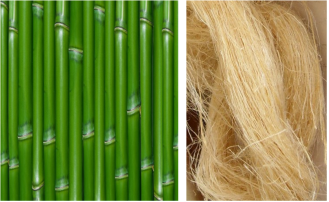
Figure 1. Bamboo Extraction Procedure.
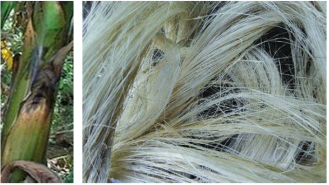
Figure 2. Enset Extraction Process.
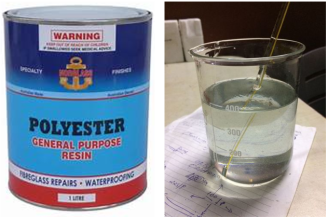
Figure 3. Polyester general-purpose resin.
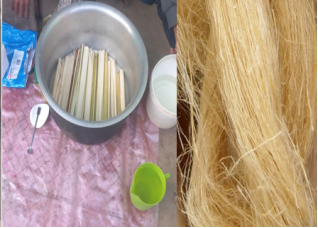
Figure 4. Alkaline treatment, Soaking and Extracted fiber.
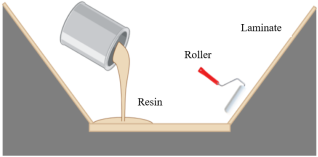
Figure 5. Hand lay-up process [6].
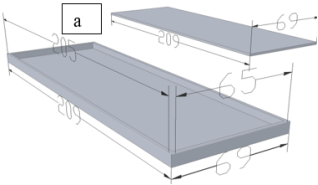
Figure 6. Mold Design.
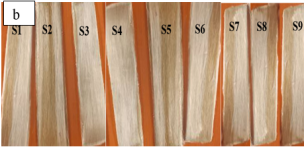
Figure 7. Samples Prepared for Test.
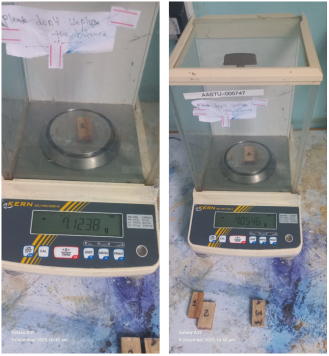
Figure 8. Water Absorption Test.

Information



 Share This Article
 Twitter
 Linked In
 Facebook
 Copy
Copy Download